Introduction
Steroid-induced rosacea is a skin problem caused by using creams with steroids, often found in fairness creams. Many people use these creams without a doctor’s advice, hoping for lighter skin. However, this can lead to serious side effects. In fact, the dangers of topical steroids are often hidden. Therefore, it is important to know how to prevent steroid-induced rosacea and protect your skin.
What is Steroid-Induced Rosacea?
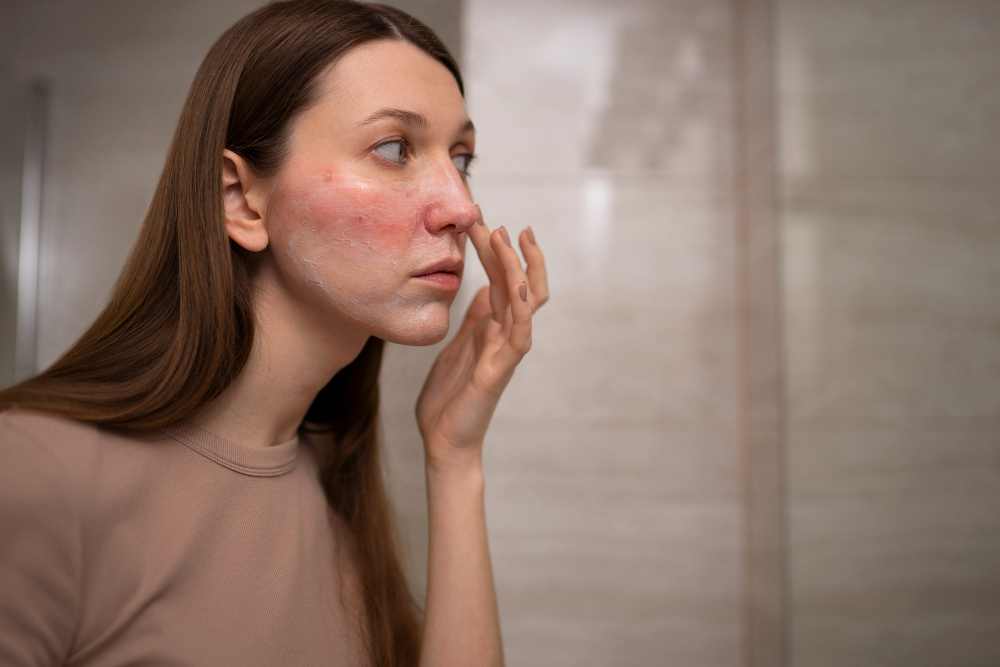
Steroid-induced rosacea is a type of skin irritation. It happens when people use steroid creams on their face for a long time. Usually, these creams are meant for short-term use and only under medical supervision. However, many fairness creams contain hidden steroids. Over time, these steroids damage the skin’s natural barrier. As a result, the skin becomes red, bumpy, and sensitive. According to dermatology experts, misuse of topical steroids is a leading cause of this condition.
Symptoms and Warning Signs
Early recognition is key to preventing severe damage. Watch for these common symptoms:
If you notice these signs after using a fairness cream, stop using it right away. Early action can help prevent lasting skin problems.
Why Self-Medicating with Fairness Creams is Dangerous
Many people believe fairness creams are safe because they are sold over the counter. However, this is not true. In fact, many of these creams contain strong steroids that can harm your skin. Over time, self-medicating with these products can cause:
Moreover, the side effects of fairness creams may not appear right away. But with continued use, the damage can become severe and hard to reverse. Therefore, it is always safer to use skin products recommended by a dermatologist.
Diagnosis and Treatment
If you suspect steroid-induced rosacea, a dermatologist can help. First, the doctor will ask about your skin care routine and check your skin. Sometimes, they may do simple tests to rule out other problems. Once diagnosed, treatment may include:
With proper care, most people see improvement in a few weeks. However, some symptoms may take longer to fade.
Prevention and Safe Skin Care Tips
Preventing steroid-induced rosacea is easier than treating it. Here are some tips to keep your skin safe:
By following these steps, you can lower your risk of skin problems and keep your skin healthy.
When to See a Dermatologist
If you notice redness, bumps, or burning after using a fairness cream, do not wait. Instead, make an appointment with a dermatologist. Early treatment can prevent lasting damage. Also, if you have used steroid creams for a long time, ask your doctor to check your skin. Remember, professional advice is the safest way to care for your skin.
If you notice symptoms of steroid-induced rosacea, consult a dermatologist for personalized care.